





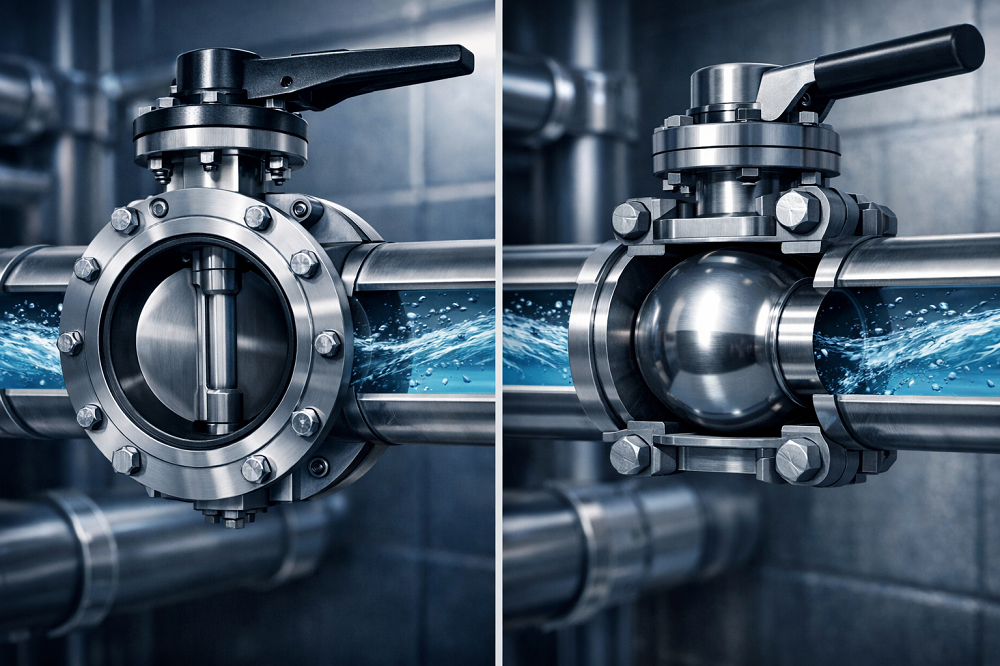
Butterfly Valves vs. Ball Valves in Hydraulics: Key Differences Explained
In the world of fluid control systems, choosing the right valve can make a substantial difference in efficiency, cost, and performance. Two of the most commonly used hydraulic control valves are butterfly valves and ball valves. While both serve the primary function of regulating fluid flow, they operate differently and suit different applications depending on system requirements.
Understanding the differences between butterfly valve vs ball valves is essential for engineers, system designers, and operators who want to ensure optimal hydraulic system performance. This article explores the core distinctions between these valve types and provides insight into where each one excels.
Design and Operating Mechanism
The primary difference between butterfly and ball valves lies in their internal construction and how they control flow. Butterfly valves feature a rotating disc mounted on a rod. This disc pivots to either block, restrict, or allow the flow of fluid. When the disc is turned parallel to the flow, the valve is fully open, allowing fluid to pass. Rotating the disc perpendicular to the flow closes the valve and stops fluid movement.
Ball valves operate with a different internal structure. They include a spherical ball with a bore through its center. When the bore aligns with the pipeline, fluid can flow through unimpeded. Rotating the ball by 90 degrees blocks the passage completely. This design allows for rapid shut-off and offers tight sealing capabilities.
While both valves provide on-off control, the mechanism of operation results in differences in responsiveness, reliability, and internal turbulence. Ball valves, with their full-bore design, tend to offer lower pressure drops and minimal flow resistance, while butterfly valves may cause slightly more flow turbulence due to the presence of the disc in the flow path.
Space Requirements and Installation
In many hydraulic applications, the physical space available for valve installation is limited. Here, butterfly valves often have the advantage. Their compact and lightweight design means they occupy less space and are easier to mount between flanges. They are particularly beneficial in large-diameter piping systems where a ball valve of the same size would be significantly heavier and bulkier.
Ball valves, due to their spherical design and housing requirements, are usually larger and heavier, especially as the diameter increases. This makes them less ideal for systems where space and weight constraints are crucial considerations. However, the robust build of ball valves also contributes to their durability in high-pressure environments.
The choice between butterfly valve vs ball valves often comes down to the trade-off between space efficiency and operational robustness. In systems that require lightweight components and easy installation, butterfly valves are generally preferred. Where durability under extreme pressure is more important, ball valves may be a better fit.
Pressure and Temperature Tolerance
Hydraulic control valves must operate effectively under a wide range of pressures and temperatures, depending on the application. Ball valves are well-suited for high-pressure systems due to their strong sealing capability and tight shut-off design. The spherical ball can withstand high internal forces and maintain a secure seal, even when fluid pressure is intense.
Butterfly valves, although capable of handling moderate pressure, are typically not recommended for extremely high-pressure applications. The disc design and rubber or elastomeric seat materials used in many butterfly valves limit their pressure and temperature ratings. However, advancements in materials and manufacturing have led to high-performance butterfly valves that can manage relatively higher pressures and temperatures than traditional models.
In high-temperature systems, metal-seated ball valves often outperform butterfly valves with non-metallic components. Nonetheless, for medium-range pressure and temperature scenarios, butterfly valves offer a cost-effective and reliable solution.
Control Precision and Flow Regulation
Another important distinction between these hydraulic control valves is their ability to regulate flow precisely. Ball valves are generally not ideal for throttling purposes. Their design focuses on full open or full close positions, and partially opening the valve can lead to seat damage and uneven flow characteristics. When used for throttling, ball valves tend to wear out faster, compromising their long-term performance.
In contrast, butterfly valves are more suited for flow regulation. The rotating disc allows for incremental adjustments, making them better for applications that require variable flow control. The streamlined design enables smoother modulation and quicker response to flow changes. While they do not provide as tight a shut-off as ball valves, butterfly valves offer more flexibility in regulating the flow rate.
Because of this, butterfly valves are often found in systems where fine-tuned control is necessary, such as HVAC systems, water distribution, and certain process industries. Ball valves remain dominant in applications requiring absolute shut-off, such as chemical processing and oil and gas systems.
Maintenance and Longevity
Maintenance requirements and expected valve lifespan are key considerations when designing or maintaining a hydraulic system. Ball valves, thanks to their enclosed design and sturdy components, tend to offer a longer service life in many demanding environments. Their sealing surfaces experience less wear during normal operation, provided they are not misused as throttling valves.
Butterfly valves may require more frequent maintenance, particularly in systems with high particulate content or corrosive fluids. The disc and seat are more exposed to wear and tear due to their position in the flow path. However, maintenance procedures for butterfly valves are typically simpler and more cost-effective, especially in systems where valve removal and reinstallation must be done quickly.
Additionally, because butterfly valves have fewer moving parts and lighter construction, they are often easier to service and replace. For operations where downtime needs to be minimized, this ease of maintenance can be a deciding factor.
Conclusion
Choosing between a butterfly valve vs ball valves in hydraulic systems involves understanding the specific requirements of your application. While both types of hydraulic control valves serve the same fundamental purpose, they perform very differently under varied conditions.
Ball valves provide superior sealing, strength under high pressure, and minimal leakage, making them ideal for applications that demand reliability and absolute shut-off. Their robust design offers longevity and confidence in high-performance systems but comes with higher cost and space requirements.
Butterfly valves, on the other hand, excel in scenarios where weight, cost, and space savings are priorities. They are well-suited for moderate pressure applications and offer better flow regulation. Their quick operation and low profile make them ideal for a wide range of commercial and industrial systems.
Ultimately, the choice comes down to your system’s demands in terms of pressure, temperature, flow control, space, and maintenance. By carefully evaluating these factors, you can select the valve type that provides the most efficient, reliable, and cost-effective solution for your hydraulic application.
Royal Brass Incorporated
Welcome Royal Brass Incorporated! We are your 3rd generation, family-owned, local hose supplier! Our family has dedicated our services to supplying northern California with all types of hoses, fittings, flanges, regulators, valves, adapters, and gauges. We pride ourselves on having the most extensive inventory in northern California. Our inventory ensures that we can fix most products on site, the same day. Here at Royal Brass Incorporated, we only hire qualified individuals who are trained in factory sales. Our fully stocked warehouses ensure that we can fill your hydraulic and pneumatic hose, tubing, and fitting needs on time, every time. High-quality customer service is our goal and has been since 1952. Stop by or contact us today!
Categorised in: Valves